خصوصی مضمون
سیّد اکبر زاہد
بھوج شالہ کے تنازعے میں جہاں ایک طرف عدالت اور ہندو تنظیمیں اسے قدیم سرسوتی مندر قرار دے رہی ہیں، وہیں بعض مؤرخین، محققین اور آثارِ قدیمہ کے ناقدین اس پورے بیانیے کو تاریخی طور پر کمزور اور نوآبادیاتی دور کی پیداوار قرار دے رہے ہیں۔
حالیہ دنوں میں مؤرخ ڈاکٹر روچیکا شرما کی ایک تفصیلی تحقیق اور لیکچر نے اس بحث کو نئی شدت دے دی ہے۔
ڈاکٹر شرما کے مطابق دھار کا یہ تاریخی مقام بنیادی طور پر “کمال مولا مسجد” اور ایک صوفی مزار کے احاطے کے طور پر جانا جاتا رہا ہے، جبکہ “بھوج شالہ” کی اصطلاح خود نوآبادیاتی دور کے آخری آثارِ قدیمہ کے بیانیوں میں پیدا ہوئی۔ ان کا دعویٰ ہے کہ ابتدائی تاریخی ریکارڈز، برطانوی سروے، فارسی کتبے اور آثارِ قدیمہ کی ابتدائی رپورٹس کہیں بھی اس مقام کو راجہ بھوج کے سنسکرت مدرسے یا سرسوتی مندر کے طور پر پیش نہیں کرتے۔
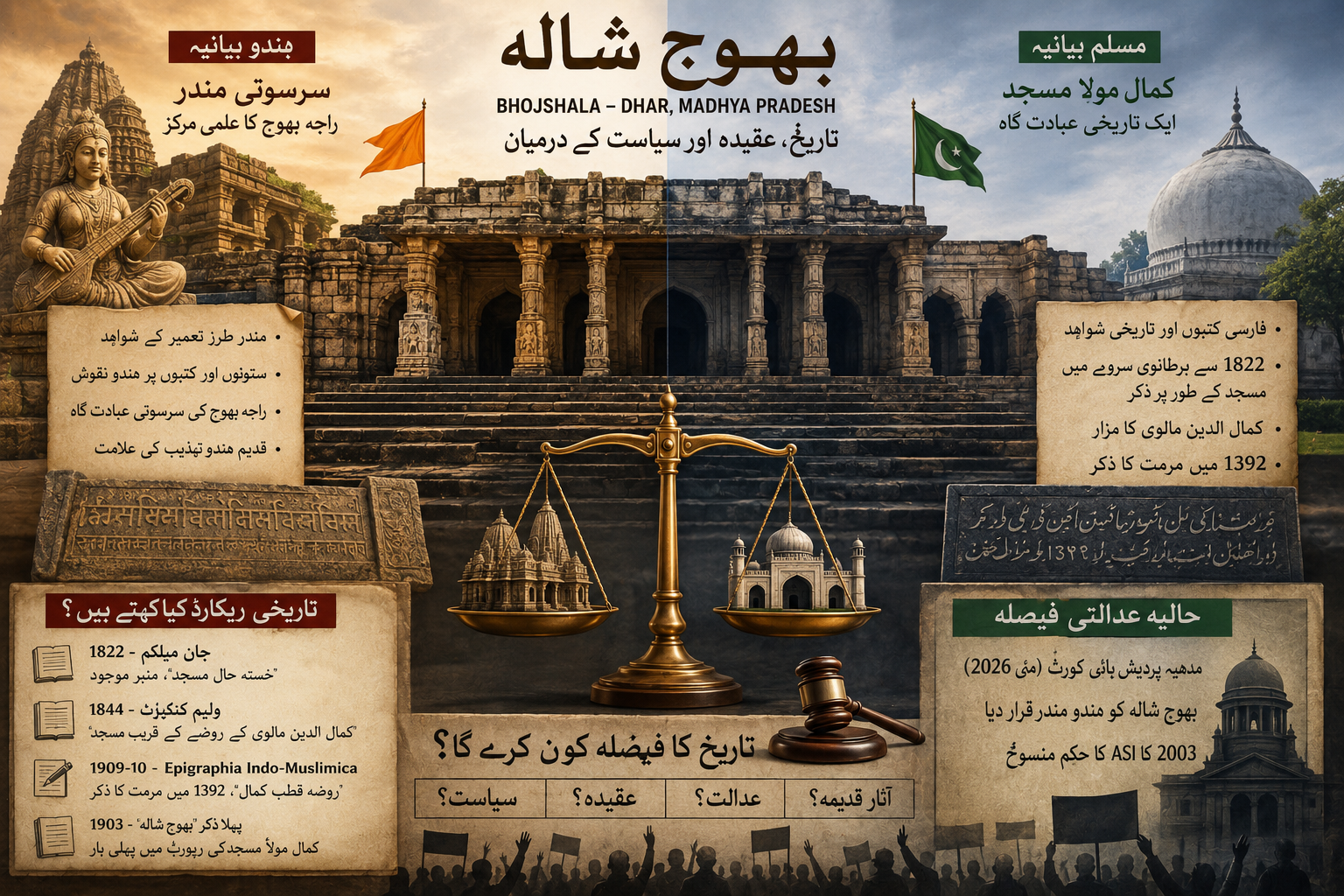
شرما کے مطابق دھار کا پہلا اہم برطانوی سروے 1822 میں برطانوی افسر جان میلکم نے کیا تھا۔ میلکم نے اپنی تحریروں میں راجہ بھوج سے متعلق کئی مقامی داستانوں کا ذکر کیا، لیکن اس متنازع عمارت کو کبھی بھوج یا کسی ہندو مندر سے منسلک نہیں کیا۔ اس کے برعکس انہوں نے اسے ایک “خستہ حال مسجد” قرار دیا جس میں منبر اور مسجدی طرزِ تعمیر موجود تھا۔
البتہ میلکم نے عمارت میں لگے ہوئے بعض سنسکرت کتبوں اور قدیم پتھروں کا ذکر ضرور کیا، مگر شرما کا استدلال ہے کہ قرونِ وسطیٰ کے ہندوستان میں قدیم عمارتوں کے پتھر اور تعمیراتی اجزاء دوبارہ استعمال کرنا ایک عام روایت تھی۔ ان کے مطابق صرف اس بنیاد پر یہ نتیجہ اخذ نہیں کیا جاسکتا کہ مسجد کسی منہدم شدہ مندر پر تعمیر ہوئی تھی۔
اسی طرح 1844 کی ایک رپورٹ میں برطانوی افسر ولیم کنکیڈ نے بھی اس مقام کو “کمال الدین مالوی کے روضے کے قریب واقع ایک چھوٹی مسجد” قرار دیا۔ بعد میں 1909-1910 کی “ایپی گرافیہ انڈو مسلمیکا” میں شائع فارسی کتبوں کے تراجم میں بھی اس مقام کو “روضہ قطب کمال” کہا گیا، جبکہ ایک کتبے میں درج تھا کہ سلطان دلاور خان غوری نے 1392 میں اس مسجد کی مرمت کروائی تھی۔
ڈاکٹر شرما کے مطابق یہ تمام شواہد اس بات کی طرف اشارہ کرتے ہیں کہ یہ مقام ایک مسجد اور صوفی مزار کے احاطے کے طور پر جانا جاتا تھا، جو چشتی بزرگ Kamal al-Din Malwi سے منسوب تھا، جنہیں روایت کے مطابق Nizamuddin Auliya نے دھار بھیجا تھا۔
شرما اس عمارت کو ایک “ہائپو اسٹائل مسجد” قرار دیتی ہیں، یعنی ایسی مسجد جس میں ستونوں کی قطاریں، صحن، محراب اور منبر موجود ہوں — جو اسلامی فنِ تعمیر کی معروف خصوصیات ہیں۔ ان کے مطابق 19ویں صدی کے ابتدائی ریکارڈ میں کہیں بھی “بھوج شالہ” کا لفظ موجود نہیں۔
وہ کہتی ہیں کہ اس مقام کو راجہ بھوج سے جوڑنے کی منظم کوششیں دراصل نوآبادیاتی دور کے آخری آثارِ قدیمہ کے سروے کے دوران سامنے آئیں۔ خاص طور پر آسٹریائی ماہرِ ہندیات Alois Anton Fuhrer نے 1893 میں قیاس کیا کہ مسجد میں استعمال شدہ بعض سنسکرت کتبے شاید کسی قدیم علمی ادارے سے تعلق رکھتے ہوں۔ مگر شرما یاد دلاتی ہیں کہ فوہرر بعد میں جعلی علمی تحقیق اور فرضی آثارِ قدیمہ کے الزامات کے باعث بدنام ہوئے اور انہیں آرکیالوجیکل سروے آف انڈیا سے استعفیٰ دینا پڑا۔
ان کے مطابق دلچسپ بات یہ ہے کہ فوہرر کی متنازع رپورٹ میں بھی “بھوج شالہ” کا نام موجود نہیں۔
راجہ بھوج اور اس مقام کے درمیان واضح تعلق پہلی بار 1902 کی ایک رپورٹ میں سامنے آیا، جب منتظم ارنسٹ بارنس نے اسے “راجہ بھوج کا مدرسہ” قرار دیا۔ شرما کے مطابق بارنس نے محقق کے۔ کے۔ لے لے کی تشریحات پر انحصار کیا، جنہوں نے سنسکرت کتبوں کی بنیاد پر بغیر کسی براہِ راست ثبوت کے یہ نتیجہ اخذ کیا تھا۔
شرما کے مطابق “بھوج شالہ” کی اصطلاح پہلی بار 1903 کی ایک رپورٹ میں استعمال ہوئی جس کا عنوان تھا: “کمال مولا مسجد سے ملنے والے ڈرامائی کتبے کا خلاصہ”۔ ان کے مطابق یہی وہ لمحہ تھا جب ایک تاریخی مسجد کے لیے ایک نیا مذہبی-تہذیبی نام وضع کیا گیا۔
ڈاکٹر شرما ان دعوؤں کو بھی چیلنج کرتی ہیں کہ یہ مقام سرسوتی مندر تھا۔ ان کے مطابق جس مجسمے کو بعد میں “بھوج کی سرسوتی” کہا جانے لگا، اس پر موجود کتبے اسے “امبیکا” یعنی ایک جین دیوی سے منسوب کرتے ہیں، اور اس مجسمے کا مسجد کے احاطے سے براہِ راست تعلق ثابت نہیں کیا جاسکا۔
ان کے مطابق Kamal Maula Mosque صدیوں تک ایک فعال مسجد کے طور پر قائم رہی، جہاں مسلمان 2000 کی دہائی کے اوائل تک باقاعدگی سے نماز ادا کرتے رہے۔ بعد میں ہندو تنظیموں کے احتجاج اور دعوؤں کے بعد 2003 میں مشترکہ عبادت کا انتظام نافذ کیا گیا، جس کے تحت جمعہ کو نماز اور منگل کو پوجا کی اجازت دی گئی۔
مسلم رہنماؤں اور بعض سیکولر مبصرین نے حالیہ عدالتی فیصلے کا موازنہ Ayodhya dispute سے کرتے ہوئے کہا ہے کہ ہندوستان میں مذہبی مقامات سے متعلق عدالتی بیانیے بتدریج “عقیدے” اور “تہذیبی دعوؤں” کی طرف منتقل ہورہے ہیں، جبکہ تاریخی شواہد کی تعبیر مسلسل سیاسی رنگ اختیار کرتی جارہی ہے۔
ڈاکٹر روچیکا شرما اپنی تحقیق کا خلاصہ ان الفاظ میں کرتی ہیں:
“ہم اب تک یہی جانتے ہیں کہ اس عمارت کا تاریخی نام ‘کمال مالوی کی مسجد’ یا ‘کمال مولا مسجد’ تھا، جبکہ ‘بھوج شالہ’ ایک بعد میں وضع کیا گیا نام ہے، جو پہلی مرتبہ 1903 میں استعمال ہوا۔”
بھوج شالہ کا تنازعہ اب صرف ایک عمارت کی ملکیت کا سوال نہیں رہا، بلکہ یہ اس بڑے سوال میں تبدیل ہوچکا ہے کہ ہندوستان اپنی تاریخ کو کس زاویے سے یاد رکھنا چاہتا ہے — آثارِ قدیمہ کے ذریعے، عقیدے کے ذریعے، یا سیاسی طاقت کے ذریعے۔
Bhojshala or Kamal Maula Mosque? — Competing Narratives of History
Alif News Investigative Feature
In the dispute surrounding Bhojshala, while courts and Hindu organisations increasingly describe the site as an ancient Saraswati temple, several historians, researchers, and critics of archaeology-based claims argue that this narrative itself is historically fragile and largely a product of late colonial interpretations.
In recent weeks, a detailed presentation and research lecture by historian Ruchika Sharma has intensified this debate.
According to Dr. Sharma, the historic site in Dhar was historically known primarily as the Kamal Maula Mosque and as part of a Sufi shrine complex, while the term “Bhojshala” itself emerged only during the later phase of colonial archaeological discourse. She argues that early historical records, British surveys, Persian inscriptions, and initial archaeological reports nowhere identify the structure as Raja Bhoj’s Sanskrit school or a Saraswati temple.
Dr. Sharma points out that the first major British survey of Dhar was conducted in 1822 by British officer John Malcolm. Although Malcolm recorded several local legends associated with Raja Bhoj, he never connected the disputed structure with Bhoj or any Hindu temple. Instead, he described it as a “dilapidated mosque” containing features such as a pulpit and architectural elements associated with Islamic religious structures.
Malcolm did note the presence of Sanskrit inscriptions and reused carved stones embedded within the structure. However, Sharma argues that the reuse of older architectural material was a common practice in medieval India and cannot by itself prove that a mosque was constructed over a demolished temple.
Similarly, an 1844 report by British officer William Kincaid described the site as a “small mosque” situated near the shrine of Kamal al-Din Malwi. Later, translations published in the 1909–1910 edition of Epigraphia Indo-Muslimica identified the site as “Roza Qutb Kamal,” while another inscription recorded that Sultan Dilawar Khan Ghori had repaired the mosque in 1392 during the Delhi Sultanate period.
According to Dr. Sharma, these records collectively suggest that the site was historically recognised as part of a mosque and Sufi shrine complex associated with Kamal al-Din Malwi, a Chishti mystic traditionally believed to have been sent to Dhar by Nizamuddin Auliya.
Sharma further describes the structure as a “hypostyle mosque” — a mosque characterised by rows of pillars, a courtyard, arches, and a pulpit — all recognised features of Indo-Islamic architecture. According to her, the expression “Bhojshala” does not appear anywhere in early nineteenth-century records.
She argues that systematic attempts to associate the site with Raja Bhoj emerged only during the later colonial archaeological surveys. In particular, Austrian Indologist Alois Anton Fuhrer speculated in 1893 that some Sanskrit inscriptions reused within the mosque may have originated from an ancient educational institution. However, Sharma notes that Fuhrer later became infamous for fabricated scholarship and forged archaeological claims, eventually resigning from the Archaeological Survey of India in disgrace.
According to Sharma, what is striking is that even Fuhrer’s controversial report did not mention the term “Bhojshala.” The first explicit connection between Raja Bhoj and the site appeared in a 1902 report by administrator Ernest Barnes, who described it as “Raja Bhoj’s school.” Sharma argues that Barnes relied heavily on the interpretations of scholar K.K. Lele, who drew conclusions from Sanskrit inscriptions without producing any direct historical evidence.
Dr. Sharma further states that the term “Bhojshala” officially appeared for the first time in a 1903 report titled Summary of the Dramatic Inscription Found in Kamal Maula Mosque. According to her, this marked the moment when a new religious-cultural identity was formally attached to a historically documented mosque.
Sharma also challenges claims that the site was dedicated to Goddess Saraswati. Referring to a statue later described by some scholars as “Bhoj’s Saraswati,” she argues that inscriptions on the idol actually identify it as “Ambika,” a Jain goddess, and that no direct evidence conclusively links the statue to the mosque complex itself.
According to Sharma, the Kamal Maula Mosque continued functioning as an active mosque for centuries, with Muslims regularly offering prayers there until the early 2000s. Following increasing mobilisation by Hindu organisations, authorities introduced a shared worship arrangement in 2003, permitting Friday prayers for Muslims and Tuesday worship rituals for Hindus.
Several Muslim leaders and secular commentators have compared the recent court ruling to the Ayodhya dispute judgment, arguing that India’s judicial discourse surrounding religious sites is gradually shifting toward questions of “faith” and “civilisational claims,” while interpretations of historical evidence increasingly acquire political dimensions.
Dr. Ruchika Sharma summarises her argument in these words:
“What we know so far is that the historical name of this structure was ‘Kamal Malwi’s Mosque’ or ‘Kamal Maula Mosque,’ while ‘Bhojshala’ is a later term that first appeared only in 1903.”
The Bhojshala dispute is therefore no longer merely a question of ownership over a monument.
It has evolved into a larger national debate over how India chooses to remember and interpret its past — through archaeology, through faith, or through political power.





Leave a Reply