الف نیوز شمارہ نمبر: 211|تاریخ: 17 مئی 2026|اتوار
اداریہ
سیّد اکبر زاہد
تمل ناڈو کی سیاست نے ایک بار پھر یہ ثابت کردیا کہ جنوبی ہند کی سرزمین صرف اقتدار کی سیاست نہیں بلکہ شناخت، ثقافت اور وفاقی خودمختاری کے سوال پر بھی حساس ہے۔
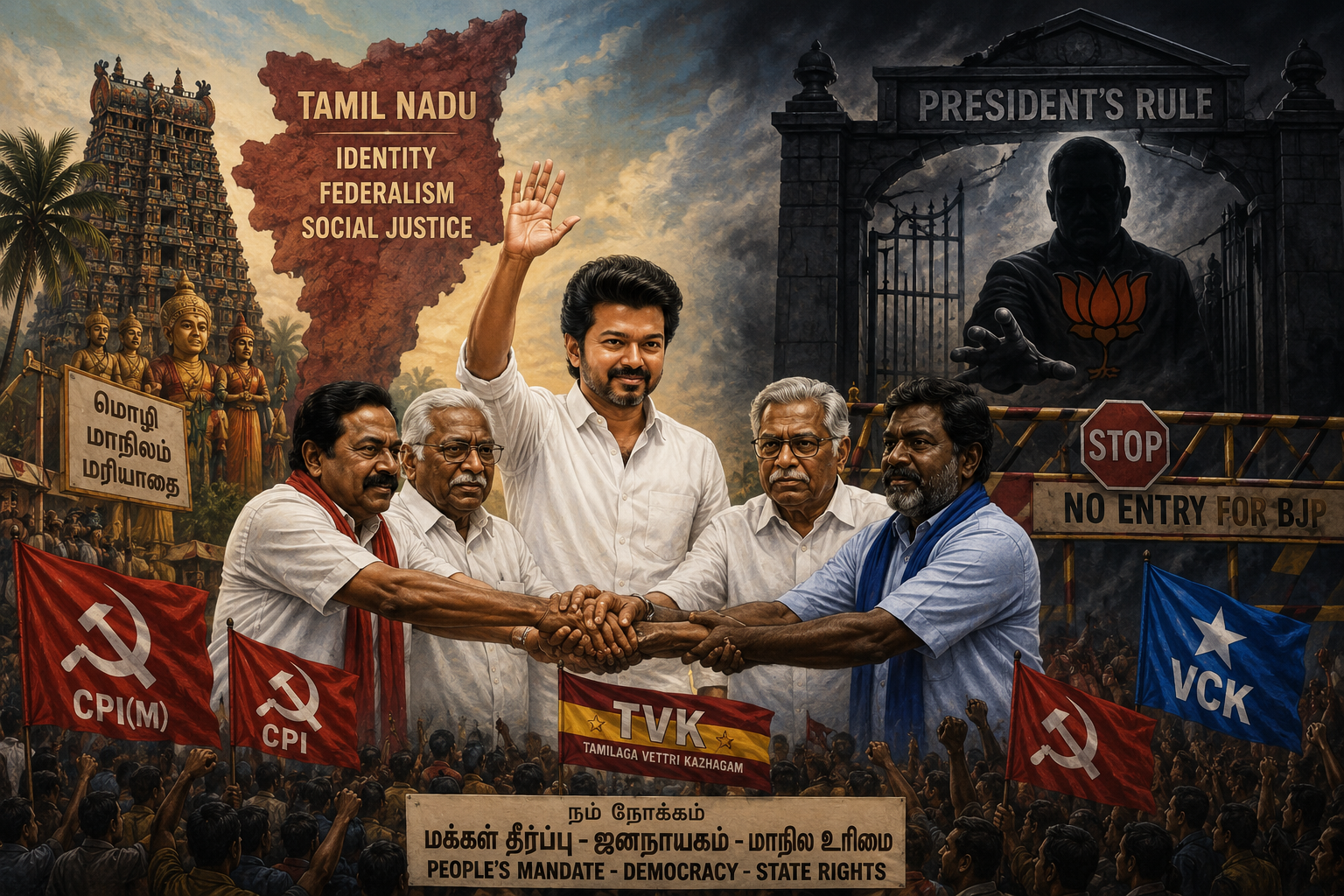
ریاست کی مختلف جماعتیں، جو برسوں سے ایک دوسرے کی نظریاتی مخالف رہی ہیں، آج ایک ایسے مقام پر کھڑی دکھائی دیں جہاں اختلافات سے زیادہ اہم بی جے پی کی مرکزی سیاست کو روکنا سمجھا گیا۔
کمیونسٹ پارٹی آف انڈیا (مارکسسٹ) کے ریاستی سکریٹری پی۔ شنموگم نے واضح الفاظ میں کہا کہ ٹی وی کے (TVK) کی حمایت کسی سیاسی محبت یا نظریاتی ہم آہنگی کا نتیجہ نہیں بلکہ اس خدشے کا اظہار ہے کہ اگر حکومت نہ بنتی تو تمل ناڈو میں صدر راج نافذ کرکے بی جے پی کو “پچھلے دروازے” سے اقتدار میں لانے کی راہ ہموار کی جاتی۔
یہ بیان دراصل تمل سیاست کے اس گہرے خوف کی ترجمانی کرتا ہے جس کے مطابق بی جے پی صرف ایک سیاسی جماعت نہیں بلکہ ایک ایسی مرکزی طاقت سمجھی جارہی ہے جو پورے ملک کو ایک مخصوص نظریے، ایک مخصوص تہذیبی شناخت اور مرکزیت پسند نظام کے تحت ڈھالنا چاہتی ہے۔
ڈراوڑی سیاست کی بنیاد ہی وفاقیت، لسانی خودمختاری اور مقامی شناخت کے تحفظ پر رکھی گئی تھی، اسی لئے تمل ناڈو میں بی جے پی کی “ایک قوم، ایک شناخت” والی پالیسیوں کو شدید مزاحمت کا سامنا ہے۔
سی پی آئی(ایم)، سی پی آئی اور وی سی کے جیسی جماعتوں نے، باوجود نظریاتی فاصلے کے، وجئے کی جماعت کی حمایت کرکے یہ پیغام دیا کہ اس مرحلے پر ان کے نزدیک اصل سوال اقتدار نہیں بلکہ ریاست کی سیاسی سمت کا تحفظ ہے۔
ان کا ماننا ہے کہ عوام نے منقسم مینڈیٹ دیا، مگر بی جے پی کو راستہ نہیں دیا۔
نئے وزیرِ اعلیٰ سی۔ جوزف وجئے کے لیے یہ حمایت ایک موقع بھی ہے اور آزمائش بھی۔
اگر ان کی حکومت عوامی توقعات، شفاف حکمرانی اور سماجی انصاف کے وعدوں کو پورا کرتی ہے تو یہ اتحاد مضبوط ہوسکتا ہے، لیکن اگر اقتدار محض سیاسی توازن تک محدود رہا تو یہی حمایت دباؤ میں بھی بدل سکتی ہے۔
اسی دوران پیٹرول، ڈیزل اور ایل پی جی کی قیمتوں میں اضافے پر بھی شدید احتجاج سامنے آیا۔
بائیں بازو کی جماعتوں کا کہنا ہے کہ مہنگائی نے نہ صرف عام آدمی کی زندگی دشوار کردی ہے بلکہ ہوٹل صنعت اور چھوٹے کاروباروں کو بھی بحران سے دوچار کردیا ہے۔
ان کے مطابق مرکز کی معاشی پالیسیاں عوامی راحت کے بجائے مالی دباؤ میں اضافہ کررہی ہیں۔
تمل ناڈو کی حالیہ سیاسی تصویر یہ بتاتی ہے کہ یہاں بی جے پی کی مخالفت صرف انتخابی سیاست نہیں بلکہ تہذیبی، لسانی اور وفاقی تشویش کا اظہار بن چکی ہے۔
اور شاید یہی وجہ ہے کہ ایک دوسرے کے سخت ناقد رہنے والے سیاسی گروہ بھی آج “وجئے” کے نام پر ایک عارضی مگر مضبوط دیوار تعمیر کرتے دکھائی دے رہے ہیں۔
English
Tamil Nadu’s Political Message: Preventing the BJP’s “Backdoor Entry”
Tamil Nadu’s evolving political landscape has once again demonstrated that politics in the State is shaped not merely by the struggle for power, but by deeper concerns over identity, federal autonomy, linguistic pride, and cultural self-respect.
Despite sharp ideological differences among regional and Left parties, several political forces have now come together to support the Tamilaga Vettri Kazhagam government led by C. Joseph Vijay.
Their support appears less like a traditional alliance and more like a collective attempt to block what they describe as the Bharatiya Janata Party’s indirect expansion into Tamil Nadu politics.
CPI(M) State secretary P. Shanmugam openly stated that the support extended to TVK was intended to prevent the imposition of President’s Rule, which, according to him, could have enabled the BJP to govern the State “through the back door.”
His remarks reflect a long-standing sentiment within Tamil Nadu’s Dravidian political culture: the fear that the BJP’s centralising and majoritarian politics could weaken the State’s linguistic identity, federal rights, and pluralistic social fabric.
For decades, Dravidian politics has positioned itself as a defender of regional autonomy and social justice.
As a result, the BJP’s broader national narrative — often associated by its critics with cultural homogenisation and ideological centralisation — faces deep resistance in Tamil Nadu.
What makes the present moment politically significant is that parties with very different ideological histories have chosen cooperation over rivalry.
Their message is clear: the fragmented mandate may not have produced a decisive majority, but in their view, it certainly did not create space for BJP dominance in the State.
For Chief Minister Vijay, however, this support comes with expectations.
The backing of Left and regional parties depends largely on whether his government delivers transparent governance, economic relief, and social stability.
At the same time, protests over rising fuel and LPG prices have intensified.
Left parties argue that the increase in petroleum prices is hurting ordinary citizens, damaging the hotel industry, and threatening small businesses and employment opportunities across the State.
Tamil Nadu’s current political moment therefore represents more than a coalition arithmetic.
It reflects a broader ideological resistance — one rooted in regional identity, federalism, and opposition to perceived political centralisation from New Delhi.





Leave a Reply