الف نیوز شمارہ نمبر: 200 | تاریخ: 5 مئی 2026 | منگل
اداریہ
سیّد اکبر زاہد
تاریخ کے بعض لمحے ووٹوں کی گنتی سے نہیں، امکانات کے وزن سے پہچانے جاتے ہیں۔ تمل ناڈو کے اس انتخابی منظرنامے میں بھی یہی کیفیت ہے—اعداد و شمار نے ایک دروازہ کھولا ہے، مگر اس کے پار کون سا راستہ اختیار کیا جائے گا، یہ فیصلہ صرف سیاست نہیں بلکہ بصیرت کا امتحان ہے۔
Joseph Vijay کی قیادت میں ابھرتی ہوئی سیاسی لہر نے یہ ثابت کیا ہے کہ عوام کبھی کبھی روایت کے بند دروازوں پر دستک نہیں دیتے، بلکہ نئی راہوں کو خود تراش لیتے ہیں۔ مگر اقتدار کی دہلیز پر قدم رکھتے ہی خواب حقیقت کے تقاضوں سے ہم آغوش ہو جاتے ہیں—اور یہی وہ لمحہ ہے جہاں لیڈر کا اصل جوہر آشکار ہوتا ہے۔
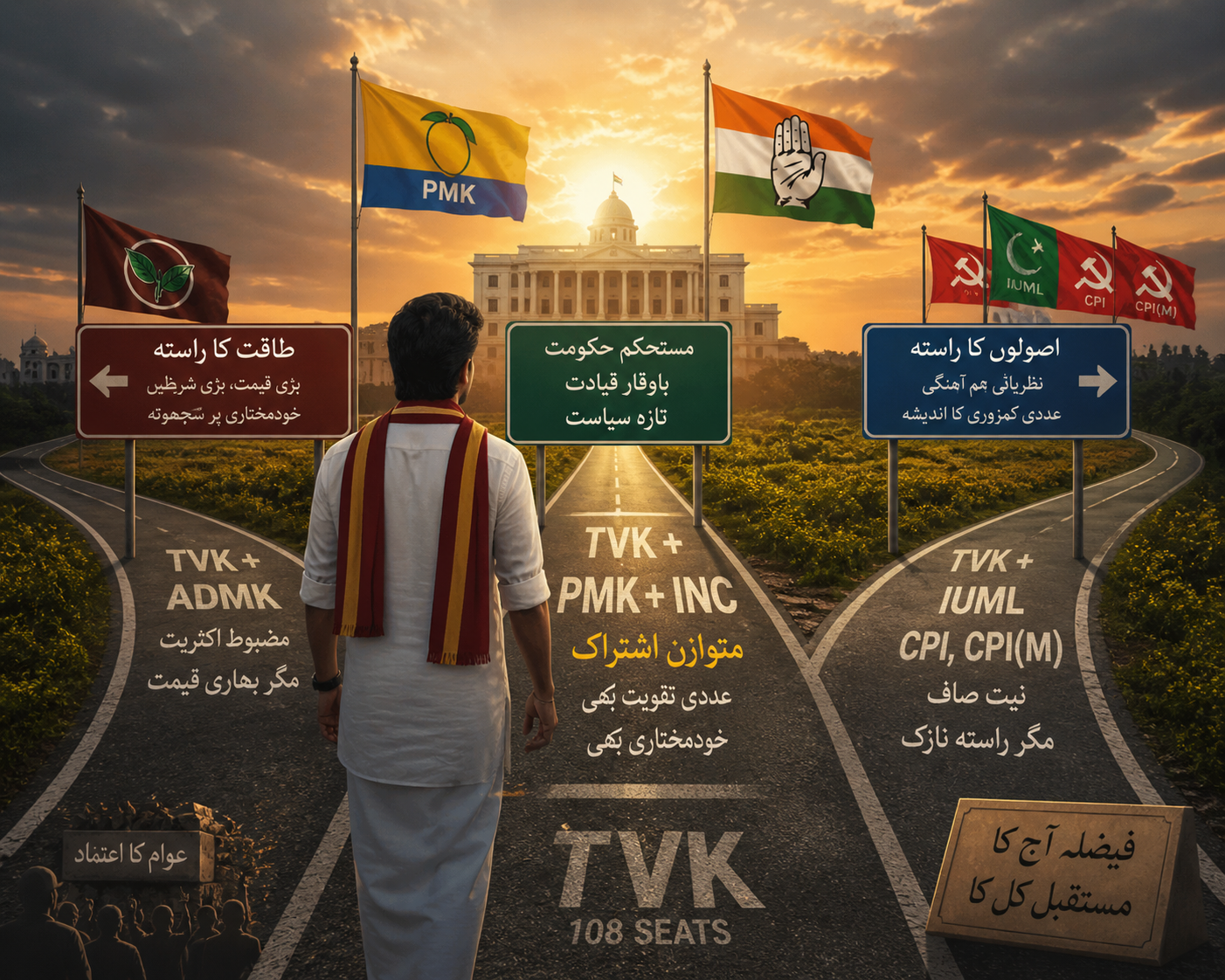
یہ انتخابی منظر تین راستے پیش کرتا ہے۔ ایک وہ جو طاقت کی ضمانت دیتا ہے، مگر اپنے ساتھ سمجھوتوں کی ایک طویل فہرست بھی لاتا ہے؛ دوسرا وہ جو اصولوں کی ہم آہنگی رکھتا ہے، مگر عددی کمزوری کا اندیشہ بھی ساتھ رکھتا ہے؛ اور تیسرا وہ جو اعتدال کی ایک لکیر کھینچتا ہے—نہ بہت بھاری، نہ بہت کمزور، مگر سیاسی استحکام اور اخلاقی وقار کے درمیان ایک نازک توازن قائم کرتا ہوا۔
سوال یہ نہیں کہ حکومت کس کے ساتھ بن سکتی ہے—سوال یہ ہے کہ حکومت کس بنیاد پر کھڑی ہوگی۔
اگر اقتدار کو محض ایک عددی کھیل سمجھا جائے تو ہر بڑی جماعت کے ساتھ اتحاد ایک آسان راستہ دکھائی دیتا ہے۔ مگر سیاست صرف کرسی کا نام نہیں، یہ اعتماد کی تعمیر کا عمل بھی ہے۔ ایک ایسی جماعت کے ساتھ اتحاد جو ماضی کی سیاست کی علامت ہو، وقتی استحکام تو دے سکتا ہے، مگر نئی سیاست کے بیانیے کو دھندلا بھی سکتا ہے۔ اور اگر چھوٹی جماعتوں کے سہارے حکومت بنائی جائے تو اصولوں کی روشنی تو میسر آئے گی، مگر وہ چراغ ہوا کے ایک جھونکے سے بجھنے کا خطرہ بھی رکھتا ہے۔
ایسے میں اعتدال کا راستہ ہی وہ راستہ محسوس ہوتا ہے جو نہ صرف حکومت کو سہارا دے سکتا ہے بلکہ اس کی روح کو بھی محفوظ رکھ سکتا ہے۔ ایک ایسا اتحاد جو عددی ضرورت کو پورا کرے، مگر قیادت کی آزادی کو بھی برقرار رکھے—جہاں فیصلے دباؤ کے تحت نہیں بلکہ وژن کے تحت کیے جائیں۔
یہ متوازن اشتراک اپنے خدوخال میں واضح دکھائی دیتا ہے—
جہاں Pattali Makkal Katchi (PMK) علاقائی اثر اور سماجی بنیاد فراہم کرے،
اور Indian National Congress (INC) ایک وسیع قومی توازن اور ادارہ جاتی سہارا مہیا کرے۔
یہ اتحاد نہ صرف عددی ضرورت کو پورا کر سکتا ہے بلکہ قیادت کی خودمختاری کو بھی برقرار رکھتا ہے—نہ بہت بھاری کہ فیصلہ سازی مفلوج ہو جائے، اور نہ اتنا کمزور کہ ہر لمحہ عدم استحکام کا اندیشہ رہے۔ یہاں اتحاد سہارا بنتا ہے، سایہ نہیں؛ اور قیادت مرکز میں رہتی ہے، منتشر نہیں ہوتی۔
یہ لمحہ Joseph Vijay کے لیے صرف حکومت سازی کا نہیں، بلکہ اپنی سیاسی شناخت کے تعین کا لمحہ ہے۔ کیا وہ ایک مضبوط مگر بوجھل سہارے کا انتخاب کریں گے، یا ایک متوازن مگر خودمختار راستہ اختیار کریں گے؟ یہی فیصلہ آنے والے برسوں میں ان کی سیاست کا عنوان بنے گا۔
تاریخ ہمیشہ ان فیصلوں کو یاد رکھتی ہے جو آسان نہیں ہوتے—مگر درست ہوتے ہیں۔ اور شاید یہی وہ موڑ ہے جہاں سیاست، طاقت سے بڑھ کر حکمت کا تقاضا کرتی ہے۔
اقتدار کے ایوان میں داخل ہونے سے پہلے، ایک سوال دروازے پر کھڑا ہے:
یہ حکومت بنے گی—مگر کیا یہ قائم بھی رہے گی؟
Editorial
There are moments in history that are not defined by the counting of votes, but by the weight of possibilities. Tamil Nadu’s current electoral landscape reflects precisely such a moment—numbers have opened a door, but the path beyond it will be determined not merely by politics, but by wisdom.
The rising political wave led by Joseph Vijay has demonstrated that people do not always knock on the doors of tradition—they often carve new paths of their own. Yet, as power approaches, dreams inevitably encounter the demands of reality. It is in this moment that true leadership is revealed.
This election presents three distinct paths: one that guarantees strength but comes with heavy compromises; another rooted in ideological harmony yet shadowed by numerical fragility; and a third—one of balance—subtle, measured, and poised between stability and dignity.
The real question is not who can form the government, but on what foundation that government will stand.
If power is treated merely as a numerical game, alliances with dominant forces may appear convenient. But politics is not just about acquiring office—it is about building trust. Aligning with legacy power structures may offer immediate stability, but risks diluting the promise of new politics. On the other hand, relying solely on smaller ideological allies may preserve purity of intent, yet expose the government to constant instability.
In this delicate moment, the path of balance emerges as the most prudent choice—a coalition that fulfills numerical requirements while preserving leadership autonomy, where decisions are guided by vision rather than compulsion.
This balanced partnership finds its most natural expression in an alliance where Pattali Makkal Katchi (PMK) contributes regional strength and social grounding, while Indian National Congress (INC) provides broader institutional and national balance.
Such an arrangement ensures stability without suffocation, and support without subordination. Here, alliance becomes a pillar—not a shadow—and leadership remains centered, not fragmented.
For Joseph Vijay, this is not merely a moment of government formation, but one of defining political identity. Will he choose a powerful yet burdensome support system, or a balanced and autonomous path? The answer will shape the narrative of his political future.
History remembers not the easiest decisions—but the right ones.
And so, at the threshold of power, one question quietly remains:
The government may be formed—but will it endure?





Leave a Reply