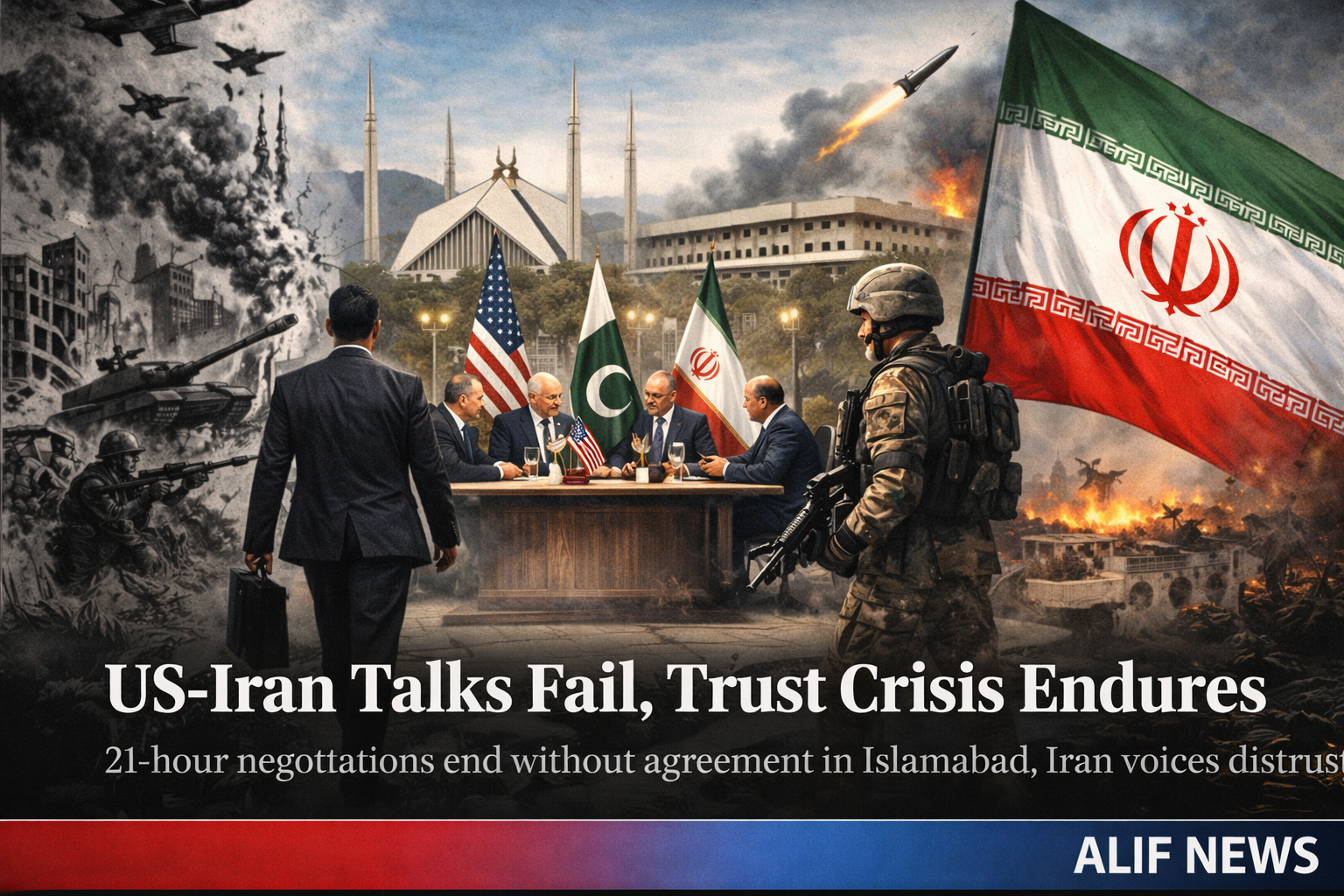
اسلام آباد کی فضا میں امید اور احتیاط کے سائے ایک ساتھ منڈلاتے رہے، جب امریکہ اور ایران کے درمیان جنگ بندی کو مستقل شکل دینے کے لیے اہم مذاکرات منعقد ہوئے۔ طویل اور پیچیدہ گفتگو کے باوجود کوئی حتمی معاہدہ طے نہ پا سکا، جس سے عالمی سفارت کاری کے راستے میں موجود عدم اعتماد کی گہری خلیج ایک بار پھر نمایاں ہو گئی۔
ایرانی پارلیمنٹ کے اسپیکر محمد باقر قالیباف نے واضح طور پر کہا کہ ایرانی وفد نے "مثبت اور مستقبل بین ” تجاویز پیش کیں، مگر امریکہ ایرانی نمائندوں کا اعتماد حاصل کرنے میں ناکام رہا۔ ان کے مطابق، ماضی کے تلخ تجربات نے ایران کو محتاط اور بدگمان بنا دیا ہے۔
دوسری جانب امریکی نائب صدر جے ڈی وینس نے اسلام آباد سے روانگی کے وقت اس بات پر زور دیا کہ امریکہ نے اپنی "حتمی اور بہترین پیشکش” سامنے رکھی تھی، لیکن بات چیت کسی نتیجے تک نہ پہنچ سکی۔
پاکستان نے ایک ثالث کے طور پر دونوں فریقین کو مذاکرات کی میز پر لانے میں کلیدی کردار ادا کیا۔ وزیر خارجہ اسحاق ڈار نے اس امید کا اظہار کیا کہ جنگ بندی برقرار رکھی جائے گی اور مستقبل میں بات چیت کے دروازے بند نہیں ہوں گے۔
ادھر خطے میں کشیدگی برقرار ہے۔ جنوبی لبنان میں اسرائیلی فضائی حملے جاری ہیں، جبکہ شمالی اسرائیل کے علاقوں میں ڈرون حملوں کے اثرات بھی سامنے آئے ہیں۔ یہ صورتحال اس بات کی نشاندہی کرتی ہے کہ سفارتی ناکامی کے اثرات میدانِ جنگ میں بھی محسوس کیے جا رہے ہیں۔
تجزیہ کاروں کے مطابق یہ مذاکرات نہ مکمل کامیابی تھے اور نہ مکمل ناکامی، بلکہ ایک ایسا مرحلہ ہیں جہاں اعتماد کی بحالی سب سے بڑا چیلنج بن چکی ہے۔ ایرانی عوام میں بھی اس عمل کے حوالے سے شکوک و شبہات پائے جاتے ہیں، تاہم اقتصادی پابندیوں کے خاتمے کی ایک مدھم امید ابھی باقی ہے۔
English News
In Islamabad, a delicate balance of hope and caution defined high-stakes negotiations between the United States and Iran, aimed at solidifying a fragile ceasefire. Despite 21 hours of intensive dialogue, no final agreement was reached, exposing the deep-rooted mistrust that continues to hinder diplomatic progress.
Iran’s Parliament Speaker Mohammad Baqer Ghalibaf stated that the Iranian delegation presented “forward-looking initiatives,” but the United States failed to gain the trust of Iranian negotiators. He emphasized that past conflicts have left Tehran wary of American intentions.
Meanwhile, US Vice President JD Vance defended Washington’s position, asserting that a “final and best offer” had been placed on the table, though it did not lead to a breakthrough.
Pakistan played a significant mediating role by bringing both sides together. Foreign Minister Ishaq Dar reiterated that the ceasefire must hold and expressed optimism that diplomatic channels would remain open for future engagement.
However, tensions persist across the region. Israeli air raids continue in southern Lebanon, while drone-related incidents have been reported in northern Israel, highlighting the fragile and volatile nature of the current ceasefire.
Analysts describe the talks as neither a breakthrough nor a breakdown, but rather a critical phase where rebuilding trust remains the central challenge. Among ordinary Iranians, skepticism toward diplomacy is widespread, though there remains a faint hope that sanctions relief could eventually improve economic conditions.





Leave a Reply