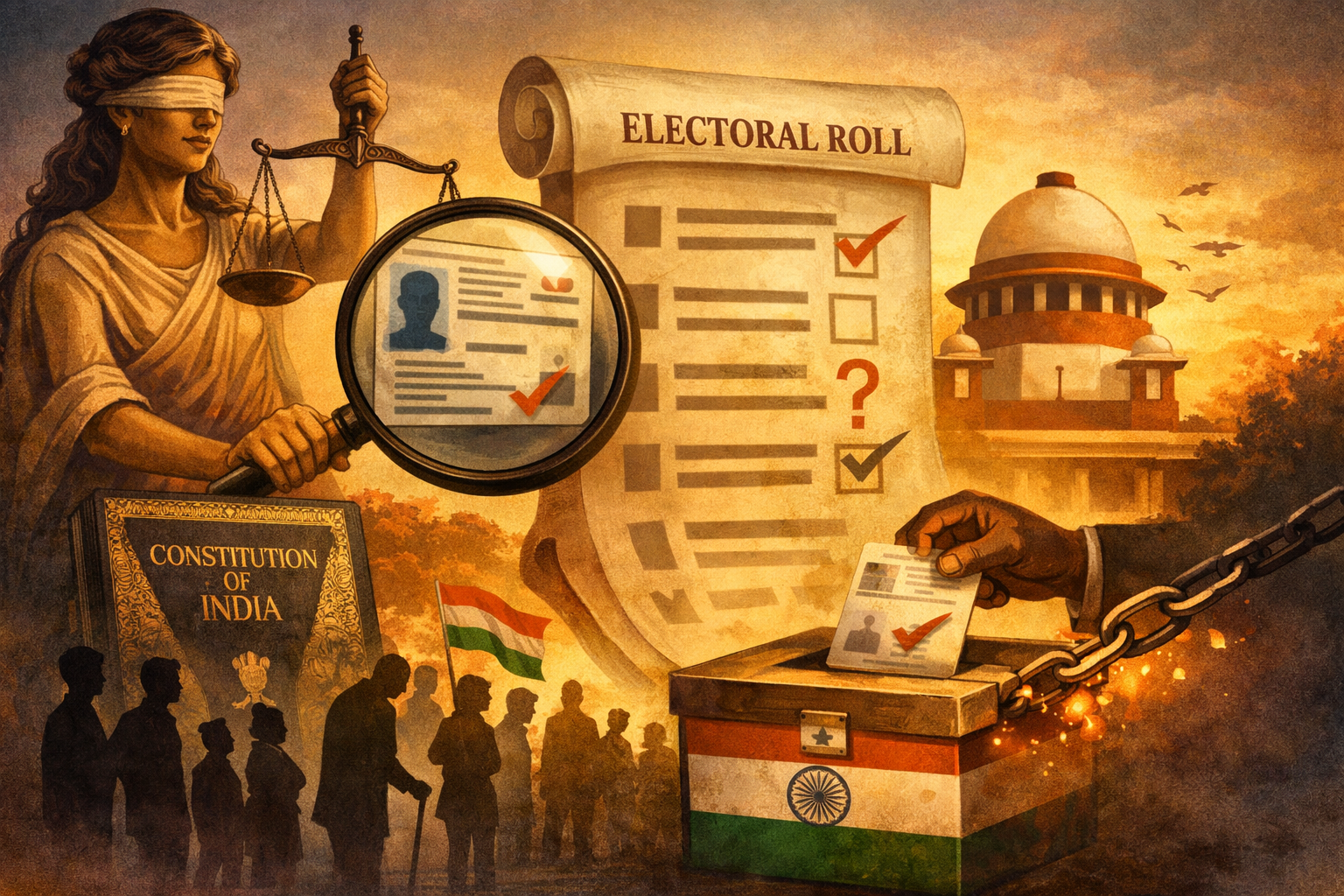
ووٹ کا حق — مستقل ذمہ داری یا عارضی اندراج؟
سپریم کورٹ میں انتخابی فہرستوں کی نظرِ ثانی پر اہم سماعت
نئی دہلی | 27 جنوری 2026
بھارت میں جمہوریت کی بنیاد — حقِ رائے دہی — ایک بار پھر سپریم کورٹ کے کٹہرے میں فکری اور آئینی سوال بن کر سامنے آئی، جب الیکشن کمیشن آف انڈیا نے عدالتِ عظمیٰ کو بتایا کہ انتخابی فہرست میں نام کا اندراج کوئی مطلق حق نہیں بلکہ ایک مشروط اور مسلسل ذمہ داری ہے۔
چیف جسٹس سوریہ کانت کی سربراہی میں قائم بنچ کے سامنے الیکشن کمیشن نے مؤقف اختیار کیا کہ آئین کے آرٹیکل 326 کے تحت ووٹر ہونے کے لیے صرف ایک وقت کی اہلیت کافی نہیں، بلکہ بھارتی شہریت، عمر اور قانونی عدم نااہلی جیسی شرائط کا برقرار رہنا ایک مسلسل تقاضا ہے۔
سینئر ایڈووکیٹ منیندر سنگھ، الیکشن کمیشن کی جانب سے پیش ہوتے ہوئے، عدالت کو بتایا:
“یہ نہیں کہا جا سکتا کہ ایک بار نام فہرست میں شامل ہو جائے تو اہلیت ختم ہونے کے باوجود ووٹ کا حق باقی رہے۔”
یہ سماعت بہار میں ہونے والی اسپیشل انٹینسو ریویژن (SIR) مہم کے خلاف دائر درخواستوں کے سلسلے میں ہو رہی تھی، جن میں اس عمل کی آئینی حیثیت کو چیلنج کیا گیا ہے۔
شہریت کی جانچ، تعین نہیں
الیکشن کمیشن کے وکلاء نے واضح کیا کہ SIR کسی بھی صورت میں شہریت کے تعین (determination) کا عمل نہیں بلکہ محض تصدیق (verification) ہے۔
سینئر ایڈووکیٹ دام سیشادھری نائیڈو نے وضاحت کرتے ہوئے کہا کہ جیسے وکلا کی اہلیت بار کونسل میں رجسٹریشن سے پہلے جانچی جاتی ہے، ویسے ہی ووٹر لسٹ کی جانچ ایک انتظامی عمل ہے، نہ کہ شہری حیثیت کا فیصلہ۔
انہوں نے مزید کہا کہ بہار میں اس عمل کے دوران کسی سنگین بے ضابطگی کی شکایت سامنے نہیں آئی، بلکہ اس کا ایک مثبت نتیجہ یہ بھی نکلا کہ 2025 کے انتخابات میں ووٹر ٹرن آؤٹ میں اضافہ ہوا۔
کوئی نئی شرط نہیں
الیکشن کمیشن کی جانب سے ایڈووکیٹ ایکلویا دویدی نے عدالت کو بتایا کہ کمیشن نے آئین یا نمائندگیِ عوام ایکٹ 1950 کے تحت دی گئی شرائط کے علاوہ کوئی نئی پابندی عائد نہیں کی۔
“یہ حق آئین کے آرٹیکل 326 اور ایکٹ کی دفعات 16 اور 19 کے دائرے میں ایک Qualified Right ہے۔
ہم اہلیت کے معیار بڑھا نہیں رہے، صرف اس کی جانچ کر رہے ہیں۔”
عدالت نے تمام دلائل سننے کے بعد سماعت جاری رکھی، اور معاملہ آئندہ تاریخ کے لیے محفوظ کر لیا گیا۔
The Right to Vote: A Permanent Entry or a Continuing Responsibility?
Supreme Court hears key arguments on Electoral Roll Revision
New Delhi | January 27, 2026
India’s democratic cornerstone — the right to vote — came under constitutional scrutiny once again as the Election Commission of India (ECI) told the Supreme Court that inclusion in the electoral roll is not an absolute right, but a qualified one, subject to continuous eligibility.
Appearing before a Bench led by Chief Justice Surya Kant, the ECI argued that Article 326 of the Constitution mandates not just one-time eligibility, but the continued fulfillment of essential conditions — Indian citizenship, minimum age, and absence of legal disqualification.
Senior advocate Maninder Singh, representing the ECI, submitted:
“A voter cannot claim that once their name is entered in the electoral roll, it must remain there irrespective of loss of eligibility.”
The court was hearing petitions challenging the constitutionality of the Special Intensive Revision (SIR) of electoral rolls conducted in Bihar.
Verification, Not Citizenship Determination
The Election Commission clarified that the SIR exercise does not determine citizenship, but merely verifies existing eligibility.
Senior advocate Dama Seshadhiri Naidu explained that verification is a routine administrative safeguard, comparable to professional credential checks, and does not amount to adjudication of citizenship.
He also pointed out that there were no recorded complaints of procedural lapses in Bihar and highlighted an unexpected benefit — increased voter participation following door-to-door verification.
No New Eligibility Conditions Added
Wrapping up the ECI’s submissions, advocate Eklavya Dwivedi emphasized that the Commission had not introduced any new criteria beyond those prescribed by the Constitution and the Representation of the People Act, 1950.
“The right to vote flows from Article 326 read with Sections 16 and 19.
We are not raising the threshold — we are ensuring the threshold is met.”
The Supreme Court continues to hear the matter, which carries significant implications for electoral integrity and democratic participation in India.





Leave a Reply