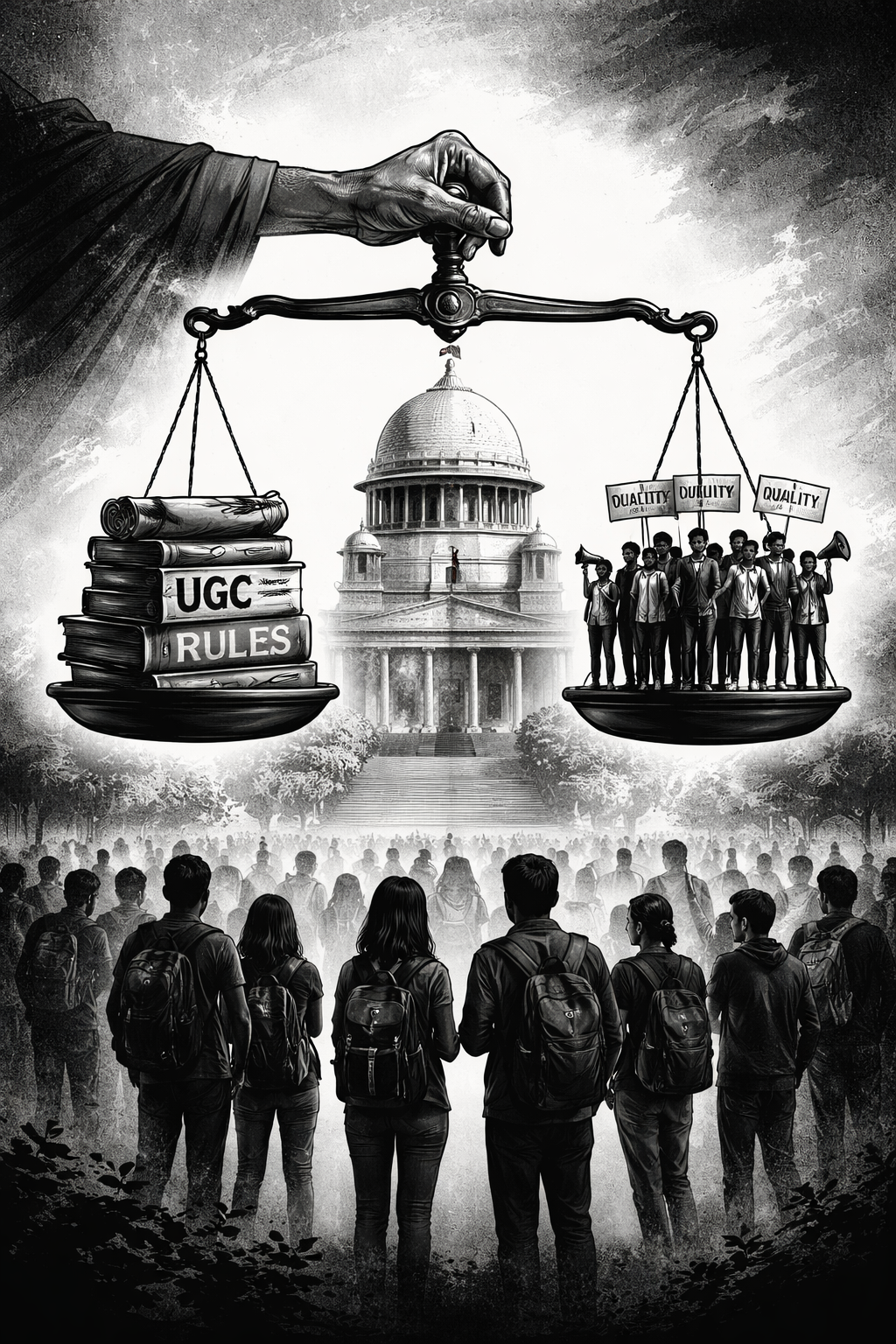
جامعات کی دہلیز پر انصاف کی دستک
نئی دہلی:
سپریم کورٹ نے یونیورسٹی گرانٹس کمیشن (UGC) کے مجوزہ 2026 مساواتی ضوابط پر عارضی روک لگا کر ہندوستانی تعلیمی منظرنامے میں ایک گہرا فکری سوال کھڑا کر دیا ہے۔ عدالتِ عظمیٰ نے ان ضوابط کو بادی النظر میں مبہم اور ممکنہ طور پر قابلِ غلط استعمال قرار دیتے ہوئے کہا کہ ایسے قوانین معاشرے اور جامعات میں ایسی دراڑیں ڈال سکتے ہیں جو علم کے چراغوں کو بانٹنے کا ذریعہ بن جائیں۔
عدالت کے الفاظ میں ایک فکری تنبیہ بھی شامل تھی:
“ہم امید کرتے ہیں کہ ہماری جامعات، امریکہ کی طرح، نظریاتی تقسیم کا میدان نہ بن جائیں۔”
یہ فیصلہ اُن طلبہ کے لیے وقتی راحت کا باعث بنا ہے جو ان ضوابط کے خلاف سراپا احتجاج تھے۔ تاہم، تعلیمی حلقوں میں رائے اب بھی منقسم ہے۔
کچھ طلبہ کو خدشہ ہے کہ یہ ضوابط ’ریورس ڈسکریمینیشن‘ کو جنم دے سکتے ہیں، جبکہ دیگر کا کہنا ہے کہ تاریخی ناانصافیوں کے ازالے کے لیے شفاف اور مضبوط حفاظتی اقدامات ناگزیر ہیں۔
مرکزی حکومت کو عدالت نے 19 جنوری تک تفصیلی جواب داخل کرنے کی مہلت دی ہے۔ یہ مقدمہ اب محض قانونی نہیں رہا، بلکہ یہ سوال بن چکا ہے کہ برابری کا تصور آئین کی روشنی میں کیسے متوازن رکھا جائے۔
الف نیوز کے نزدیک، یہ فیصلہ ہمیں یاد دلاتا ہے کہ
قانون جب تعلیم سے مکالمہ کرتا ہے، تو صرف دفعات نہیں، نسلوں کا مستقبل زیرِ بحث آتا ہے۔
A Knock of Justice at the Gates of Universities
Supreme Court Stays UGC 2026 Equity Norms
New Delhi:
In a development of profound constitutional and social significance, the Supreme Court of India has stayed the proposed UGC 2026 Equity Regulations, describing them as “prima facie vague and prone to misuse.” The apex court cautioned that such norms could inadvertently fracture academic spaces, transforming centres of learning into arenas of ideological division.
In a telling observation, the court remarked:
“We hope our campuses do not get divided like those in America.”
The interim order has offered immediate relief to protesting students, yet it has also exposed deep fault lines within the academic community.
While some students fear the emergence of “reverse discrimination,” others argue that without clear and enforceable safeguards, centuries-old caste-based exclusion cannot be meaningfully addressed.
The central government has been directed to submit a detailed response by January 19, as the debate now transcends legal technicalities and enters the realm of constitutional morality and social balance.
From Alif News’ perspective, this judicial pause is a reminder that
when law speaks to education, it must do so with precision, empathy, and an unwavering commitment to unity.





Leave a Reply